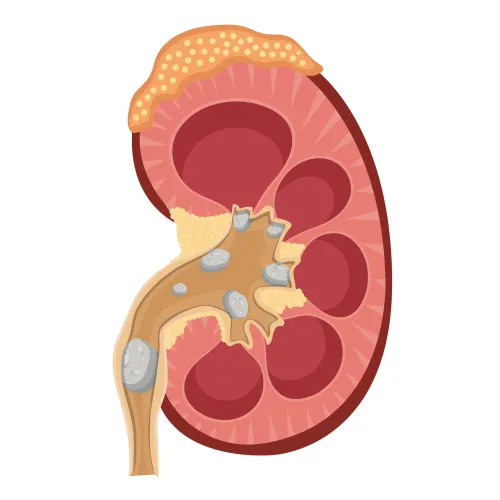
Severe pain in the side or back that suddenly becomes difficult to ignore can sometimes be caused by a urinary stone. Treatment for Kidney stone pain depends on much more than controlling discomfort. The size and location of the stone, whether urine flow is obstructed, the presence of infection, kidney function, and the patient's overall health can all influence what should happen next.
For patients in Thane West, Maharashtra, timely assessment is particularly important when stone pain is intense, recurrent, or accompanied by urinary symptoms.
Why Kidney Stones Can Cause Severe Pain
Kidney stones may remain unnoticed while they are inside the kidney. Pain often begins when a stone moves into the ureter, the narrow tube carrying urine from the kidney to the bladder.
Typical symptoms may include:
- Sharp pain in the side, back, or lower abdomen
- Pain that comes in waves
- Nausea or vomiting
- Burning during urination
- Frequent urge to urinate
- Blood in the urine
Fever or chills alongside suspected stone symptoms require prompt medical assessment because infection combined with urinary obstruction can become serious.
How the Cause of Pain Is Evaluated
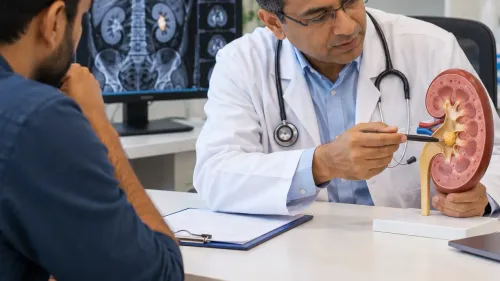
Treatment usually starts with confirming whether a stone is actually responsible for the symptoms. Depending on the clinical situation, a urologist may recommend urine tests, blood tests, ultrasound, CT imaging, or other investigations.
Imaging helps establish important details such as stone size, exact location, urinary obstruction, and whether one or both kidneys are affected.
What Treatment May Involve
Small stones may sometimes pass naturally. In suitable cases, management can involve pain relief, adequate fluid intake, observation, and medication selected according to the patient's condition.
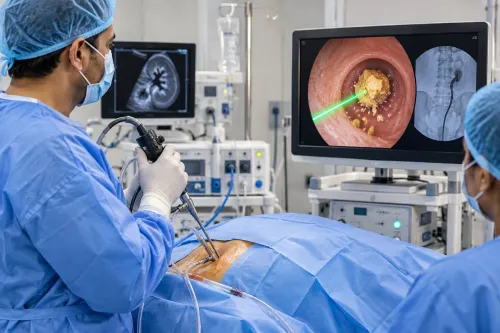
Larger stones, persistent obstruction, uncontrolled pain, infection, or stones unlikely to pass may require intervention. Depending on the stone, procedures can include ureteroscopy, laser stone fragmentation, shock-wave treatment, or percutaneous techniques for selected larger kidney stones.
The appropriate procedure is determined after assessment rather than simply choosing treatment according to pain intensity.
Recovery Depends on the Treatment Used
Patients managed conservatively may resume normal activities relatively quickly once pain settles, although stone passage can take time.
Recovery after an endoscopic procedure is often relatively short, but temporary urinary burning, mild blood in the urine, urgency, or discomfort can occur. Some patients require a temporary ureteric stent, which may itself cause frequency or flank discomfort until it is removed.
Individual recovery instructions should be followed carefully.
Benefits and Possible Risks
Effective stone treatment can relieve obstruction, protect kidney drainage, control symptoms, and reduce complications. Procedures nevertheless have potential risks, including bleeding, infection, ureteric injury, residual stone fragments, stent-related discomfort, and the possibility of additional treatment.
Dr. Vivek Jadhav Laser Stone and Urology Clinic evaluates stone-related symptoms in Thane West with treatment planning based on clinical findings and imaging.
Frequently Asked Questions
Does every kidney stone need surgery?
No. Smaller stones may pass without surgery when there is no significant obstruction, infection, or other complication.
Can drinking more water remove every stone?
Hydration is important, but water alone cannot guarantee passage of a stone, particularly when it is large or impacted.
When is stone pain an emergency?
Severe pain with fever, chills, persistent vomiting, reduced urine output, or significant weakness requires prompt medical attention.
The key to treating kidney stone pain is identifying what the stone is doing to the urinary system, not simply masking the pain.
Keywords